From smartphones to laptops, we spend more time than ever exposed to blue light. While the sun is the largest source, artificial blue light from screens penetrates deeper into the skin than UV rays. Researchers now link this exposure to premature aging, uneven pigmentation, and skin barrier disruption. The real question is whether advanced treatments like lasers and injectables can undo the damage—or if prevention is the only solution.
Jump To:
TLDR – Quick Guide
- Blue light damage: Causes oxidative stress, pigmentation, and collagen breakdown.
- Lasers: Target discoloration and stimulate collagen renewal.
- Injectables: Restore volume, improve texture, and enhance skin resilience.
- Best approach: Combination treatments plus daily protection.
- Science verdict: Reversal is possible, but ongoing protection is essential.
What Is Blue Light Damage?
Blue light, also known as high-energy visible (HEV) light, penetrates skin more deeply than UVA or UVB rays. This causes the release of free radicals, which accelerate skin aging. Over time, the result can be fine lines, pigmentation spots, dullness, and even inflammation.
How Lasers Target Blue Light Damage
Collagen Stimulation
Fractional and non-ablative lasers heat the deeper skin layers, triggering natural collagen production. This helps smooth fine lines caused by oxidative stress.
Pigmentation Correction
Certain devices break apart pigmentation clusters left by chronic blue light exposure. As the skin heals, tone becomes clearer and more even.
Barrier Restoration
By improving cellular turnover, laser therapy enhances skin’s defense against future damage. Patients often notice a brighter, more resilient complexion.
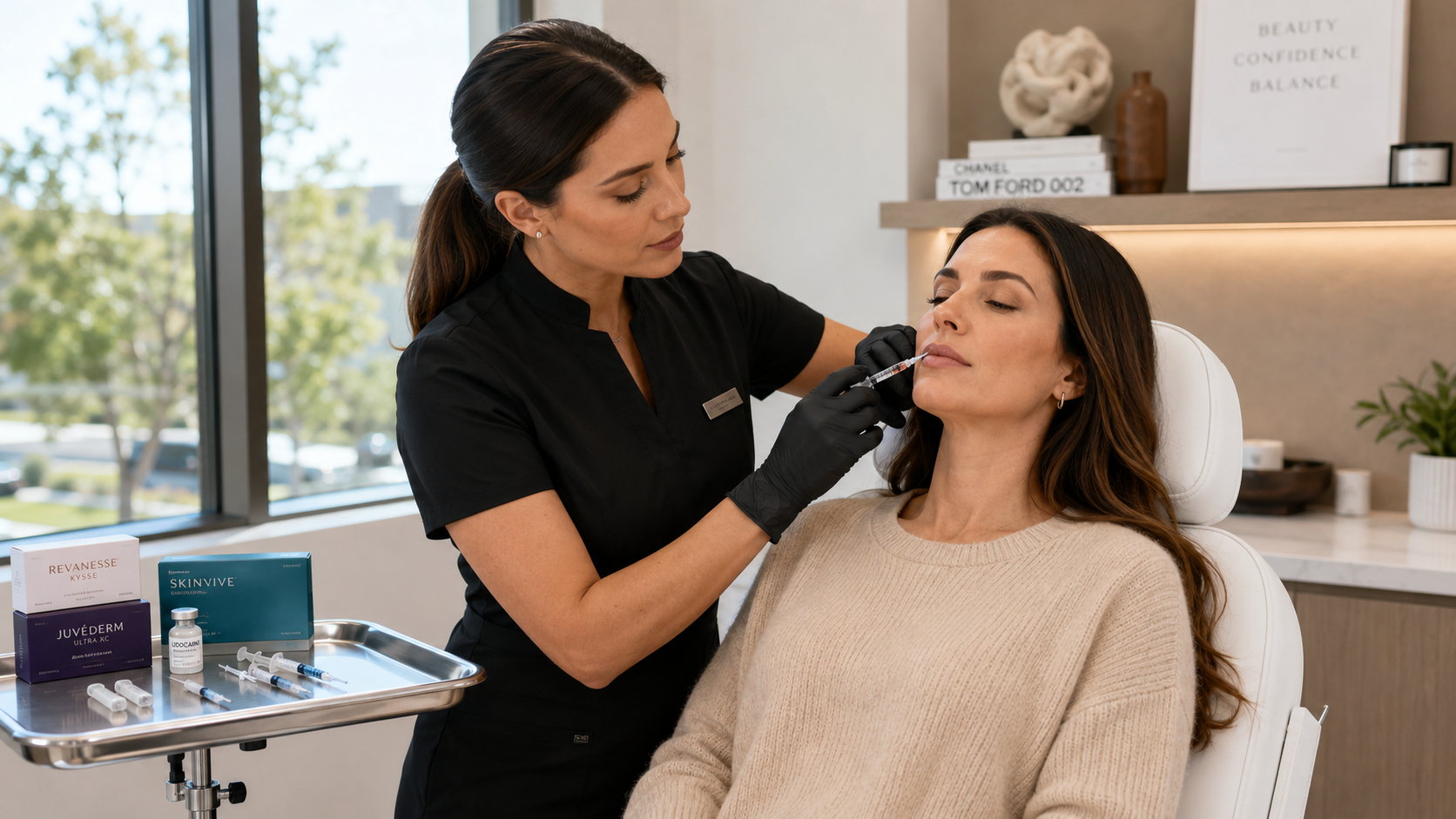
How Injectables Support Skin Repair
Hyaluronic Acid Fillers
Blue light accelerates dehydration and volume loss. Hyaluronic acid fillers restore plumpness, smoothing fine lines and improving hydration.
Neuromodulators
Repeated squinting at screens deepens dynamic wrinkles. Neuromodulators relax facial muscles, reducing lines and preventing further creasing.
Biostimulatory Injections
Products like Radiesse or Sculptra stimulate collagen, repairing structural damage caused by prolonged exposure. These provide long-term improvement in firmness and elasticity.
Combining Treatments for Maximum Impact
While lasers address pigmentation and texture, injectables rebuild volume and collagen. Together, they form a holistic strategy for reversing blue light damage. Patients seeking results often benefit from a customized plan that blends both therapies. Regular treatments paired with antioxidant-rich skincare create long-lasting protection.
Key Takeaways
- Blue light damage accelerates aging, pigmentation, and inflammation.
- Lasers correct discoloration and stimulate collagen production.
- Injectables restore hydration, smooth wrinkles, and rebuild volume.
- Combination therapy offers the most visible results.
- Prevention with daily SPF and screen-safe habits remains essential.
FAQs
What makes blue light damage different from sun damage?
Blue light penetrates deeper into the skin than UV rays, creating oxidative stress at the cellular level. Unlike sunburn, the effects aren’t immediately visible but develop over time. This makes prevention and consistent treatment even more important.
Can lasers completely reverse blue light damage?
Lasers can significantly reduce pigmentation, improve texture, and stimulate collagen. While they don’t erase damage entirely, they help the skin look younger and healthier. Results depend on the severity of exposure and number of treatments.
How do injectables help with blue light damage?
Injectables target the secondary effects of blue light, like dehydration and fine lines. Fillers plump the skin, neuromodulators relax repetitive wrinkles, and biostimulatory products rebuild collagen. Together, they complement laser therapy for comprehensive repair.
Is blue light damage permanent without treatment?
Left untreated, blue light damage can worsen, leading to deeper wrinkles and stubborn pigmentation. Some damage may stabilize with strong skincare, but visible reversal usually requires professional intervention. That’s why lasers and injectables are often recommended.
Who benefits most from treating blue light damage?
Anyone with early signs of digital aging, such as dullness, uneven tone, or fine lines, can benefit. Younger patients may use treatments preventively, while older patients seek correction. Personalized assessment ensures the right blend of lasers, injectables, and ongoing protection.