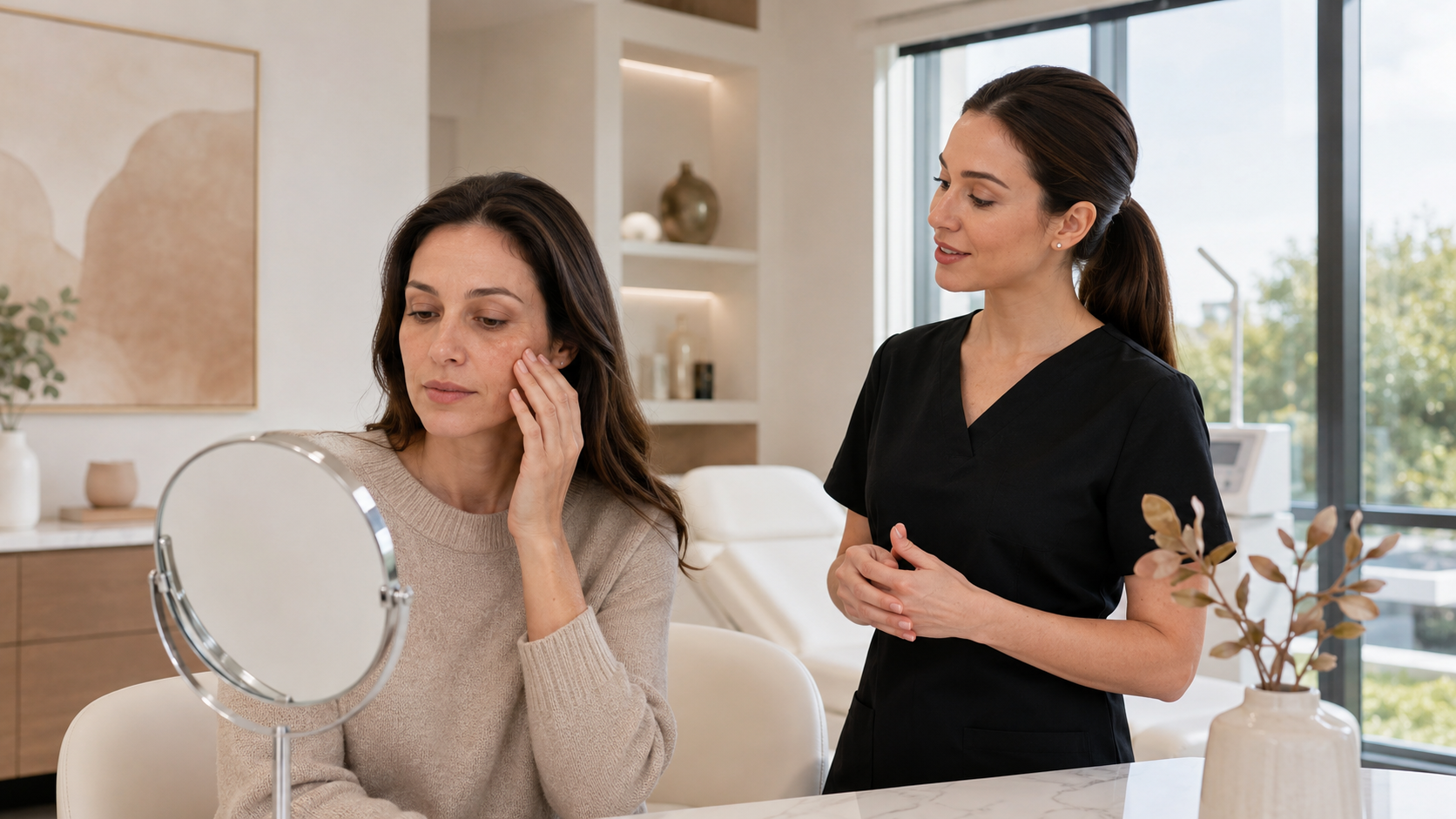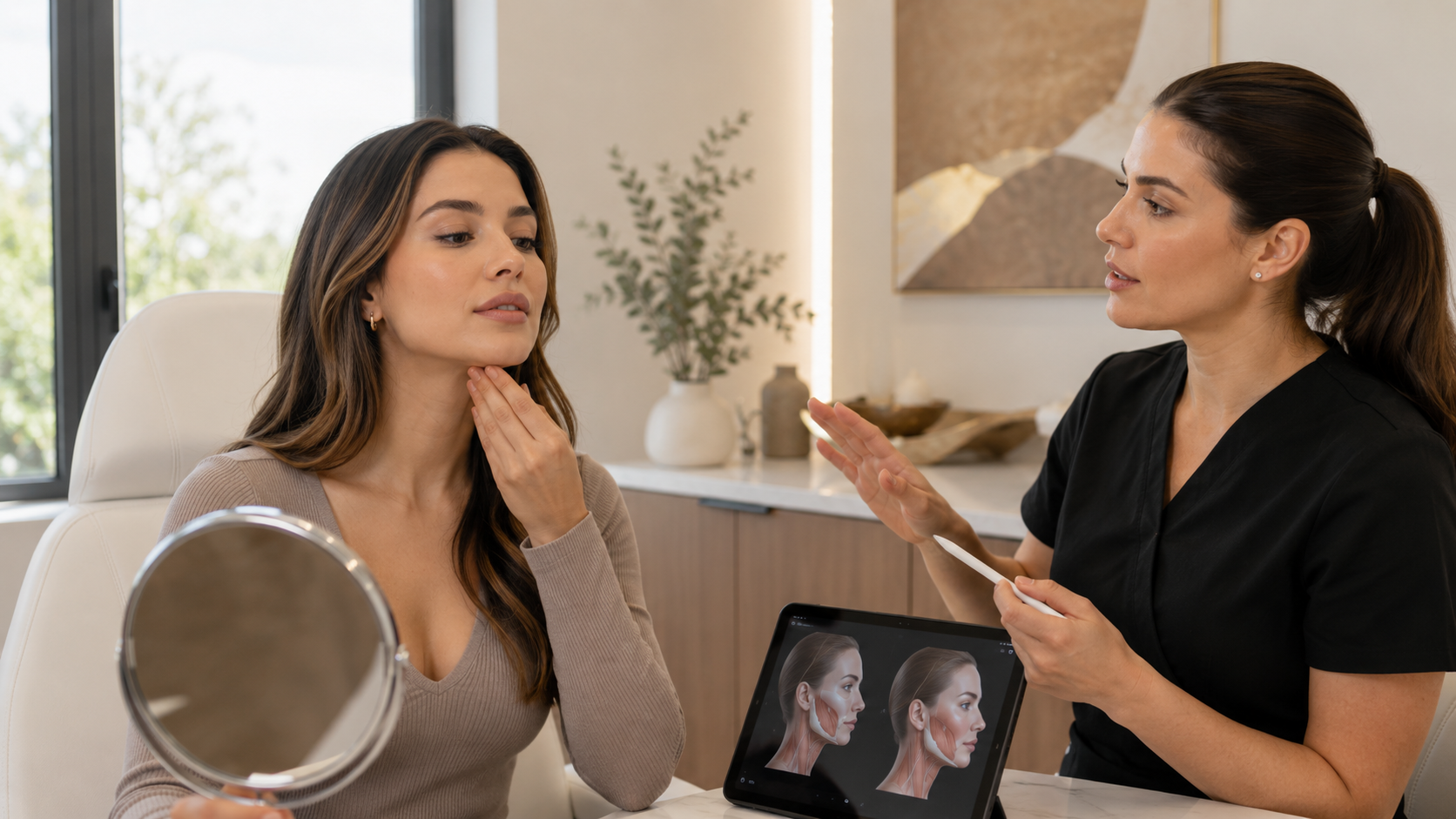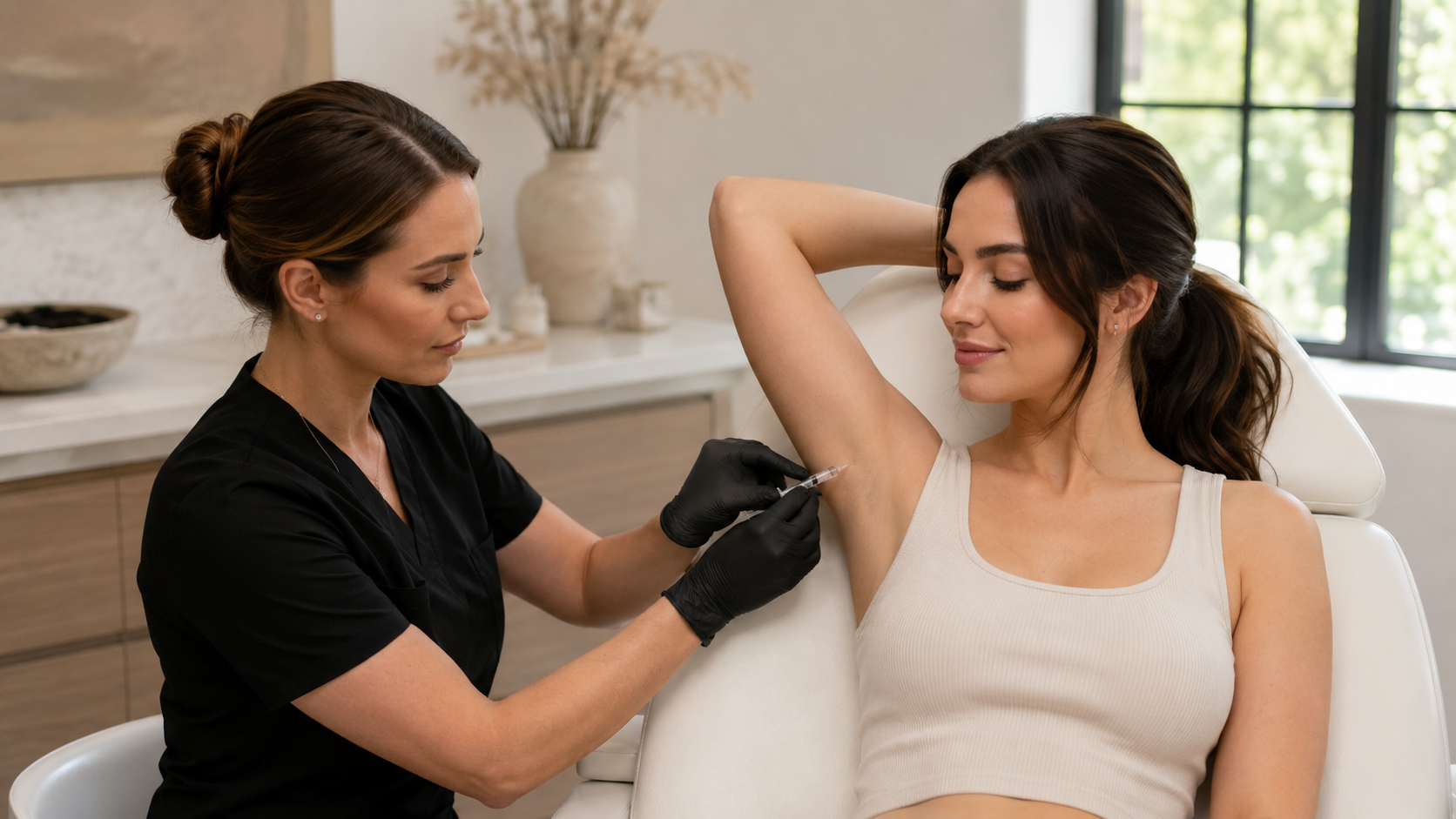
Many people ask, how does water affect skin—and whether drinking more water can truly slow aging. Hydration absolutely matters, but its role is often misunderstood. Water supports skin at a cellular level, influencing elasticity, barrier strength, and overall resilience, yet it works best as part of a broader skin health strategy rather than a standalone solution.
Jump To:
TLDR Quick Guide
- Water plays a foundational role in skin hydration and function.
- Proper hydration supports elasticity, barrier strength, and cellular repair.
- Dehydration accelerates visible aging and dullness.
- Water alone can’t reverse aging but enhances treatment outcomes.
- Long-term skin health depends on hydration plus targeted skincare and treatments.
The Role of Water in Skin Structure
Skin cells rely on water to function
Skin cells are largely composed of water, which allows them to maintain shape and flexibility. Proper hydration supports cellular turnover and nutrient transport. When water levels drop, cells shrink and function less efficiently.
Hydration and the skin barrier
The outer skin barrier depends on water to remain intact. A well-hydrated barrier protects against environmental damage and moisture loss. Chronic dehydration weakens this defense over time.
How Hydration Impacts Skin Elasticity
Elastic fibers need moisture
Collagen and elastin fibers rely on surrounding hydration to remain flexible. Dehydrated skin loses bounce and resilience more quickly. This contributes to early sagging and fine lines.
Why elasticity declines with age
As we age, the skin’s ability to retain water naturally decreases. Even with good hydration habits, internal water distribution changes. This makes supportive treatments increasingly important over time.
Dehydration and Accelerated Skin Aging
Fine lines vs. true wrinkles
Dehydration causes temporary fine lines that disappear when moisture is restored. However, long-term dehydration accelerates deeper structural aging. Over time, lines become permanent.
Inflammation and oxidative stress
Low hydration increases inflammation and oxidative damage. These processes break down collagen faster. Proper hydration helps moderate this damage but cannot fully prevent it alone.
External vs. Internal Hydration
Drinking water isn’t enough
Internal hydration supports overall skin health, but it doesn’t directly hydrate the skin’s surface layers. Environmental exposure and barrier loss still lead to dryness. This is why topical and procedural support matters.
Supporting skin from the outside
Treatments like professional Facials help replenish surface hydration and strengthen the barrier. These approaches complement internal hydration. Together, they improve texture and glow.
Water, Skin Volume, and Plumpness
Temporary fullness from hydration
Well-hydrated skin appears fuller and smoother. This effect is subtle and temporary. Water alone cannot restore lost facial volume.
Structural volume loss
Aging reduces fat pads and collagen—not water content alone. Treatments such as Fillers & Other Injectables address deeper volume loss. Hydration enhances results but doesn’t replace these solutions.
Hydration and Skin Treatments
Why hydrated skin responds better
Hydrated skin heals faster and tolerates treatments more effectively. Procedures produce better outcomes when the skin is healthy and balanced. Dehydration can delay recovery.
Combining hydration with advanced treatments
Energy-based treatments like Laser Treatments stimulate collagen but rely on good skin health. Hydration supports the skin’s repair response. This combination improves long-term results.
Can Water Prevent Wrinkles?
What water can and can’t do
Water supports skin function but does not stop aging. Genetics, sun exposure, and lifestyle play larger roles. Hydration is a supportive factor—not a cure.
A realistic approach to aging
Healthy skin aging requires a combination of hydration, protection, and targeted treatments. Clinics like Skinjectables emphasize layered strategies rather than single solutions. This produces more consistent, natural-looking outcomes.
Long-Term Skin Health Strategy
Consistency matters more than extremes
Regular hydration habits matter more than occasional overconsumption. Skin responds to long-term balance. Extreme intake doesn’t produce extra benefits.
Hydration as part of a system
Water supports metabolism, circulation, and detoxification. These systems indirectly affect skin quality. Hydration works best alongside nutrition, sun protection, and professional care.
Key Takeaways
- Water supports skin health, elasticity, and barrier strength.
- Dehydration accelerates visible aging and dullness.
- Hydration alone cannot reverse wrinkles or volume loss.
- Skin treatments perform better on well-hydrated skin.
- Long-term results require a layered skin health approach.
FAQs
Does drinking more water improve skin immediately?
It may improve skin plumpness slightly if you were dehydrated. However, results are subtle. Long-term consistency matters more.
Can water prevent wrinkles from forming?
No—water supports skin health but doesn’t stop aging. Sun exposure and collagen loss are bigger factors. Hydration helps but isn’t a solution alone.
Is topical hydration better than drinking water?
They serve different purposes. Drinking water supports internal health, while topical hydration supports the skin barrier. Both are necessary.
Why does skin still look dry even when hydrated?
Barrier damage allows moisture to escape. Environmental factors play a role. Professional treatments help restore balance.
Should hydration change with age?
Yes—aging skin retains less water naturally. Supporting hydration becomes more important over time. Treatment strategies often evolve as well.