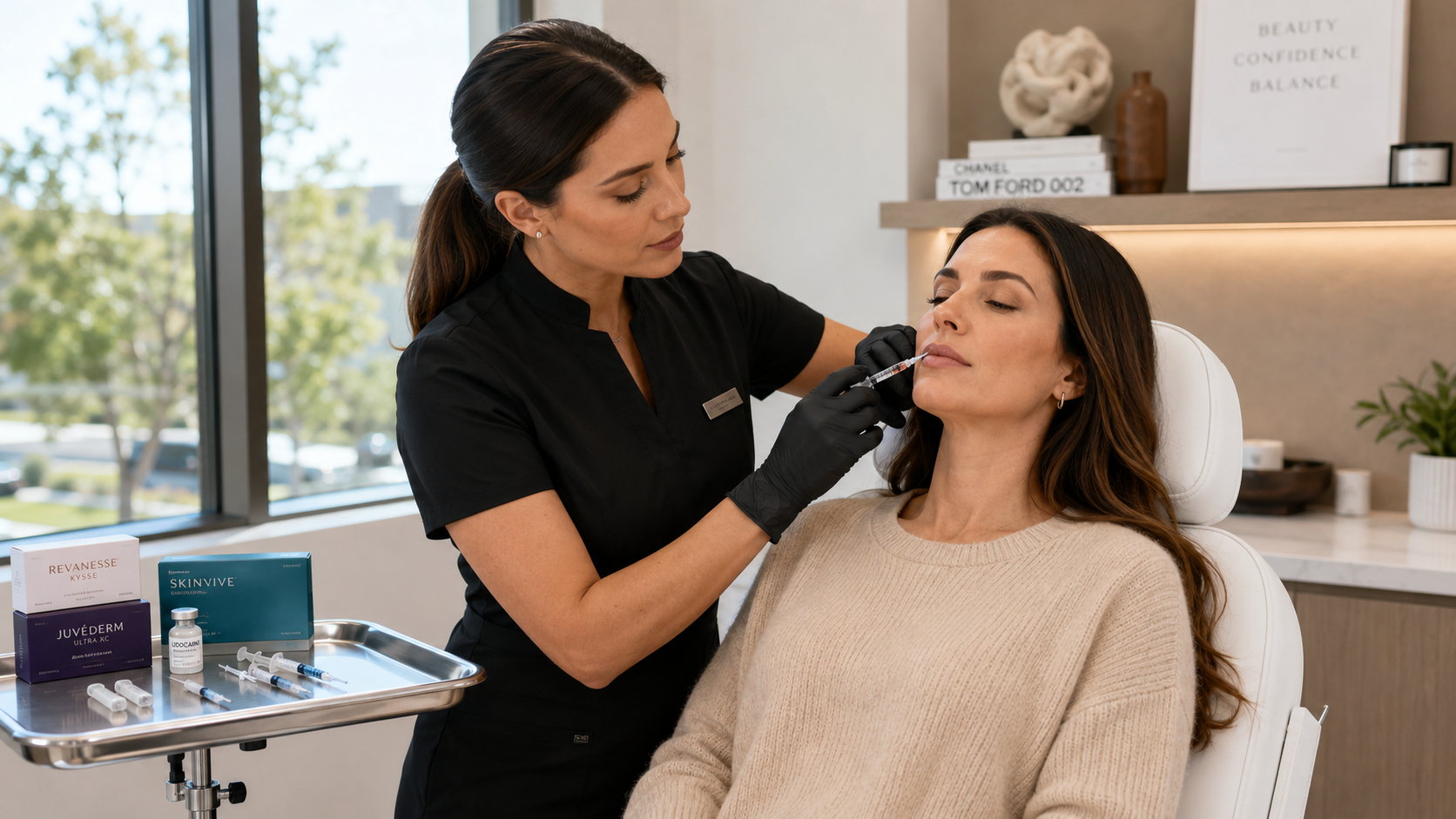
When it comes to wrinkle relaxers, Botox and Dysport are two of the biggest names in the aesthetic world. But how do you choose between them? While both reduce fine lines and wrinkles, they have key differences that can impact your results. If you’re looking for smoother, younger-looking skin but aren’t sure which treatment is best for you, this guide will break it all down.
Jump To:
TLDR – Quick Guide
- Both Botox and Dysport are neurotoxins that temporarily relax muscles to reduce wrinkles.
- Dysport spreads more easily, making it great for larger areas like the forehead.
- Botox is more precise, ideal for small areas like crow’s feet.
- Dysport kicks in faster (2-3 days) compared to Botox (4-7 days).
- Results last around the same time (3-4 months for most people).
Detailed Breakdown
What Are Botox and Dysport?
Both Botox and Dysport contain botulinum toxin type A, which works by blocking nerve signals to targeted muscles. This prevents muscle contractions that cause wrinkles.
- Botox (onabotulinumtoxinA): The industry leader, widely used for cosmetic and medical treatments.
- Dysport (abobotulinumtoxinA): A close competitor, with a slightly different formulation that spreads more easily.
Key Differences Between Botox and Dysport
| Feature | Botox | Dysport |
| Onset Time | 4-7 days | 2-3 days |
| Spreadability | More localized | Spreads easily |
| Best for Areas | Small areas (e.g., crow’s feet, lip lines) | Larger areas (e.g., forehead, frown lines) |
| Dosage Differences | Requires fewer units | More units needed for the same effect |
| Duration | 3-4 months | 3-4 months |
Which One Should You Choose?
- Go for Botox if:
- You want a more controlled, localized treatment.
- You’re targeting small, specific areas like around the eyes.
- You’ve had Botox before and like your results.
- Go for Dysport if:
- You need to treat a larger area like the forehead.
- You want results to kick in faster.
- You prefer a softer, more diffused effect.
Are There Any Side Effects?
Both Botox and Dysport have minimal downtime. Possible side effects include:
- Temporary redness or swelling at the injection site.
- Mild bruising (can be minimized with proper aftercare).
- Rare cases of drooping if the product migrates (which is why choosing a skilled injector is key!).
Key Takeaways
- Botox and Dysport work similarly but have slight differences in spreadability and onset time.
- Dysport spreads more easily, making it better for large areas like the forehead.
- Botox is more precise, ideal for smaller, targeted areas.
- Both last about 3-4 months, so the choice comes down to your aesthetic goals.
- Consulting an experienced injector is the best way to determine which one suits your needs.
FAQs
1. Is Dysport cheaper than Botox?
It often appears cheaper per unit, but since Dysport requires more units for the same effect, the overall cost is usually similar.
2. Can I switch between Botox and Dysport?
Yes! Some people find that they respond better to one over the other, so trying both under expert guidance can help you decide.
3. Does Botox or Dysport last longer?
Both typically last 3-4 months, though results can vary based on metabolism, muscle strength, and lifestyle.
4. Can Botox and Dysport be used together?
In some cases, injectors use both for different areas of the face to achieve the best results.
5. What’s the best way to make results last longer?
Avoid excessive sun exposure, hydrate well, and schedule maintenance treatments before full muscle movement returns.