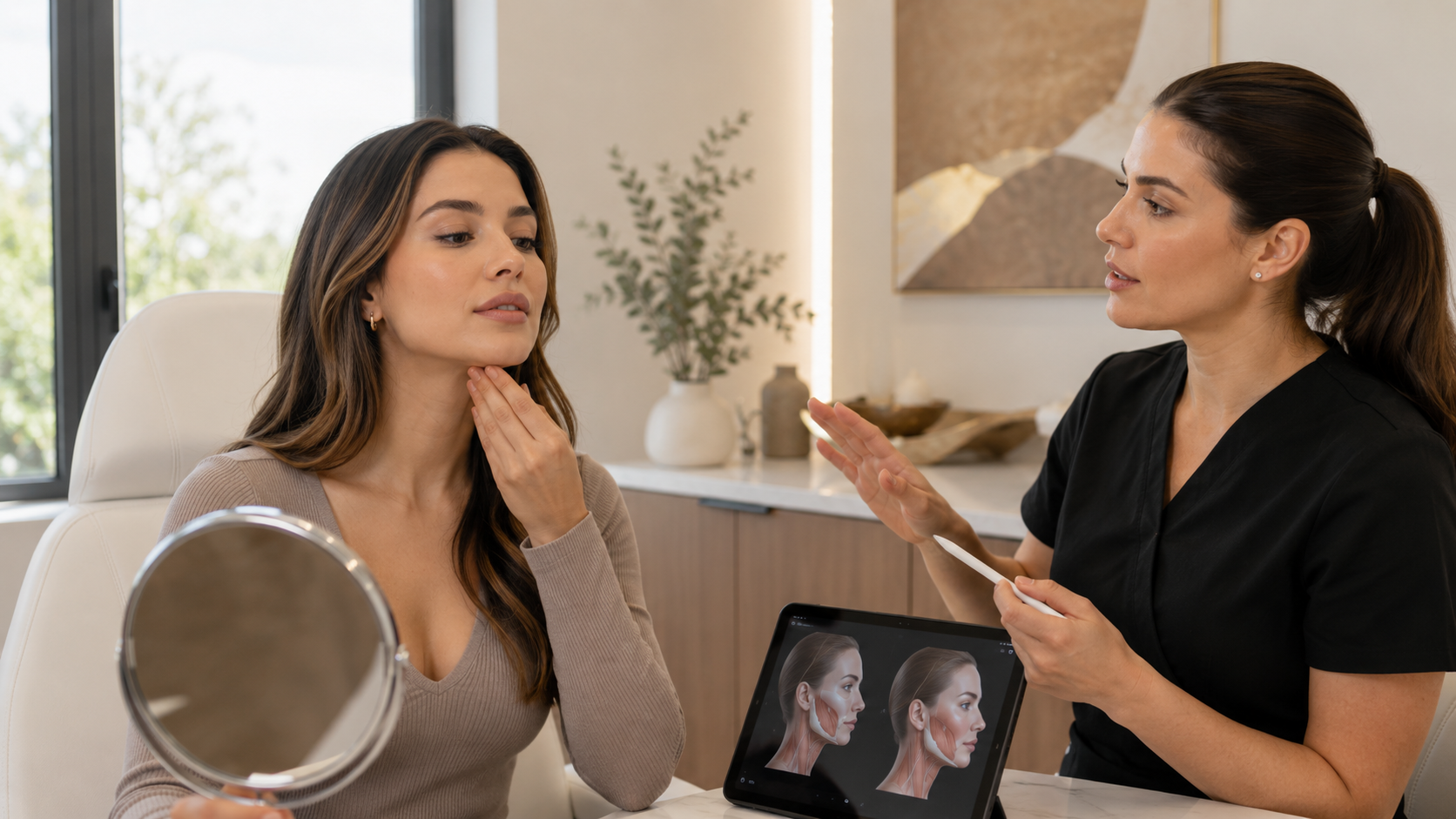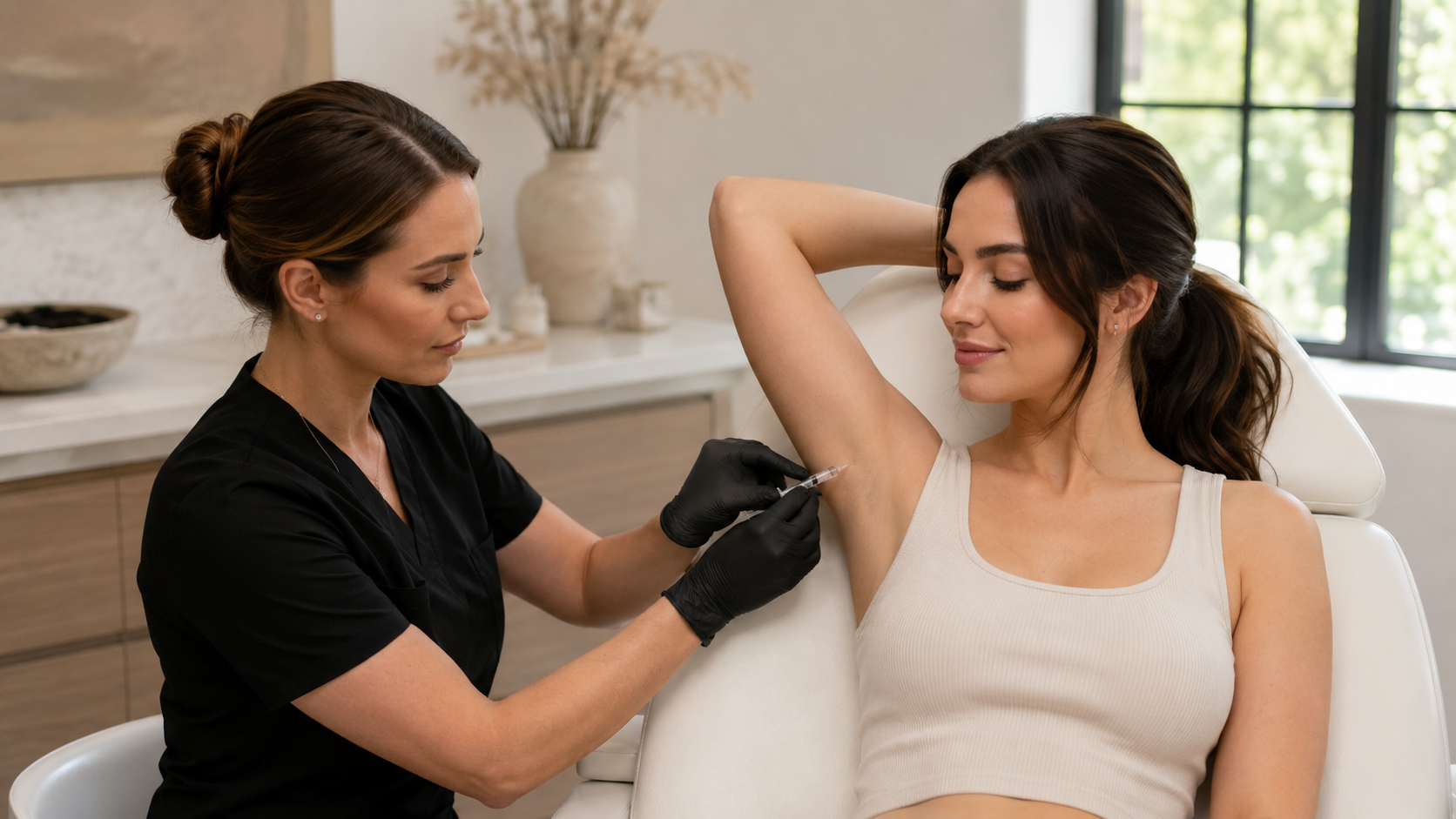
When comparing Xeomin vs Botox, many people focus on brand names or longevity—but the real deciding factor is how your face moves. Facial expressions, muscle strength, and habitual movement patterns all influence how neurotoxins perform. Choosing the right option isn’t about freezing wrinkles; it’s about balancing relaxation with natural expression. Understanding how facial movement guides treatment selection leads to better, more personalized outcomes.
Jump To:
- TLDR Quick Guide
- Why Facial Movement Patterns Matter
- Understanding Botox Through a Movement Lens
- Understanding Xeomin Through a Movement Lens
- Movement-Based Areas Where Choice Matters Most
- Treatment History and Muscle Memory
- Why Custom Assessment Outperforms One-Size-Fits-All
- Combining Neurotoxins With Other Treatments
- Key Takeaways
- FAQs
TLDR Quick Guide
- Xeomin vs Botox isn’t about which is “better,” but which suits your facial movement.
- Muscle strength, expression habits, and treatment history matter.
- Xeomin works well for precise, targeted correction.
- Botox offers predictable smoothing for broader muscle patterns.
- A movement-based assessment leads to more natural results.
Why Facial Movement Patterns Matter
Faces Don’t Age Uniformly
Every face moves differently. Some people overuse certain muscles when smiling, frowning, or raising their brows. These habitual patterns determine where lines form and how deep they become.
Muscle Activity Influences Results
Stronger or more active muscles often require a different approach. Treating all faces the same can lead to underwhelming or overly stiff results. Movement analysis ensures treatment works with your expressions, not against them.
Understanding Botox Through a Movement Lens
How Botox Works in Dynamic Areas
Botox contains accessory proteins that slightly diffuse after injection. This makes it effective for treating broader muscle groups like the forehead. It delivers consistent smoothing when muscles contract across a wider area.
Best Facial Patterns for Botox
Botox is often ideal for patients with strong, evenly distributed muscle movement. It works well for deep expression lines that need reliable relaxation. Many first-time neurotoxin patients respond predictably to Botox.
Understanding Xeomin Through a Movement Lens
How Xeomin Targets Muscle Precision
Xeomin is a “naked” neurotoxin—meaning it has no accessory proteins. This allows for more precise targeting. It’s often favored when refined control is needed.
Best Facial Patterns for Xeomin
Xeomin can be ideal for patients with smaller, more defined muscle movements. It’s commonly chosen for subtle corrections or for patients who metabolize neurotoxins quickly. Precision helps maintain natural facial dynamics.
Movement-Based Areas Where Choice Matters Most
Forehead and Brow Dynamics
The forehead often involves large muscle groups. Patients with strong brow elevation may benefit from Botox’s diffusion. Those needing subtle shaping may prefer Xeomin.
Glabella (Frown Lines)
Frown lines involve powerful muscles. Both options work well, but muscle size and contraction intensity guide product choice. Targeted precision may reduce heaviness.
Crow’s Feet and Smile Patterns
Smile lines reflect repetitive motion. Xeomin’s controlled spread can soften lines without flattening expressions. Botox can work well for more pronounced creasing.
Treatment History and Muscle Memory
Previous Neurotoxin Use Matters
Long-term neurotoxin users may develop muscle adaptation. Some patients respond better to switching products. This can refresh results and improve longevity.
Resistance and Sensitivity Considerations
Although uncommon, some patients feel results fade faster with certain products. Movement-based reassessment helps adjust strategy. Personal response matters more than brand loyalty.
Why Custom Assessment Outperforms One-Size-Fits-All
Static vs Dynamic Evaluation
Photos alone don’t tell the full story. Skilled injectors assess facial movement in real time. This reveals how muscles interact during expression.
Matching Treatment to Goals
Some patients want maximum smoothing. Others prioritize movement and softness. Clinics like Skinjectables emphasize personalized planning through services such as neurotoxins rather than default product choices.
Combining Neurotoxins With Other Treatments
Supporting Skin Quality
Neurotoxins work best when skin health is optimized. Treatments like facials improve texture and elasticity. This enhances overall results.
Structural Support When Needed
If volume loss contributes to lines, neurotoxins alone may not be enough. Strategic use of fillers and other injectables supports balanced facial rejuvenation.
Key Takeaways
- Xeomin vs Botox decisions should be movement-based, not brand-based.
- Facial muscle patterns influence diffusion and results.
- Botox suits broader, stronger muscle activity.
- Xeomin offers precision for subtle, targeted correction.
- Personalized assessment delivers the most natural outcomes.
FAQs
Is Xeomin better than Botox for natural results?
It depends on facial movement. Xeomin’s precision can preserve expression. Botox also looks natural when matched correctly.
Does Xeomin last as long as Botox?
Longevity varies by individual. Some patients experience similar duration. Muscle activity plays a major role.
Can I switch between Xeomin and Botox?
Yes, many patients do. Switching can improve responsiveness. A professional assessment guides timing and choice.
Does facial strength affect how much product I need?
Absolutely. Stronger muscles often require different dosing. Movement analysis ensures balance.
How do I know which one is right for me?
A consultation with dynamic facial assessment is key. Movement patterns reveal what works best. Personalized planning leads to better results.